All these bad idea shitposts will be meant to poke at the border between painful "realism" and practically usable rules and ideas that make the game more fun. Even if 99% will never ever practically work, I think it might be fun just to think about some of the ideas we can strip mine. Most characters are not assumed to have some kind of chronic disease, but drugs are not only used by people who are sick.
Today's topic is: pharmacology! Originally the idea was based around potions, but the principles here are a bit more expansive. I'll lay down some of the basic ideas I think can be interesting:
- Delivery methods
- Side effects/long term effects
- Dosing and alternative uses
- Mechanism of Action
- Source: biochemical tools, alchemy, natural occurrence
Delivery methods feels like it can be fun, but I have no idea what it would look like exactly. You drink potions. BORING. Oral ingestion is (usually) a slower, long drawn release of drug effects that is affected by stomach acid and the liver it has to cross through.
Snorting is a bit better, so is rubbing powder on mucus membranes. INJECTIONS are pretty cool. Your fighter popped a healing potion? Ok well mine just pinned himself with adrenaline and is getting ready to eat your fighter's face off. Into the veins and arteries is standard. Maybe a regenerative solution ingested will provide slow, stable healing over a few days while an injected solution will let you reattach limbs on the fly for less fluid. Roll for cancer though.
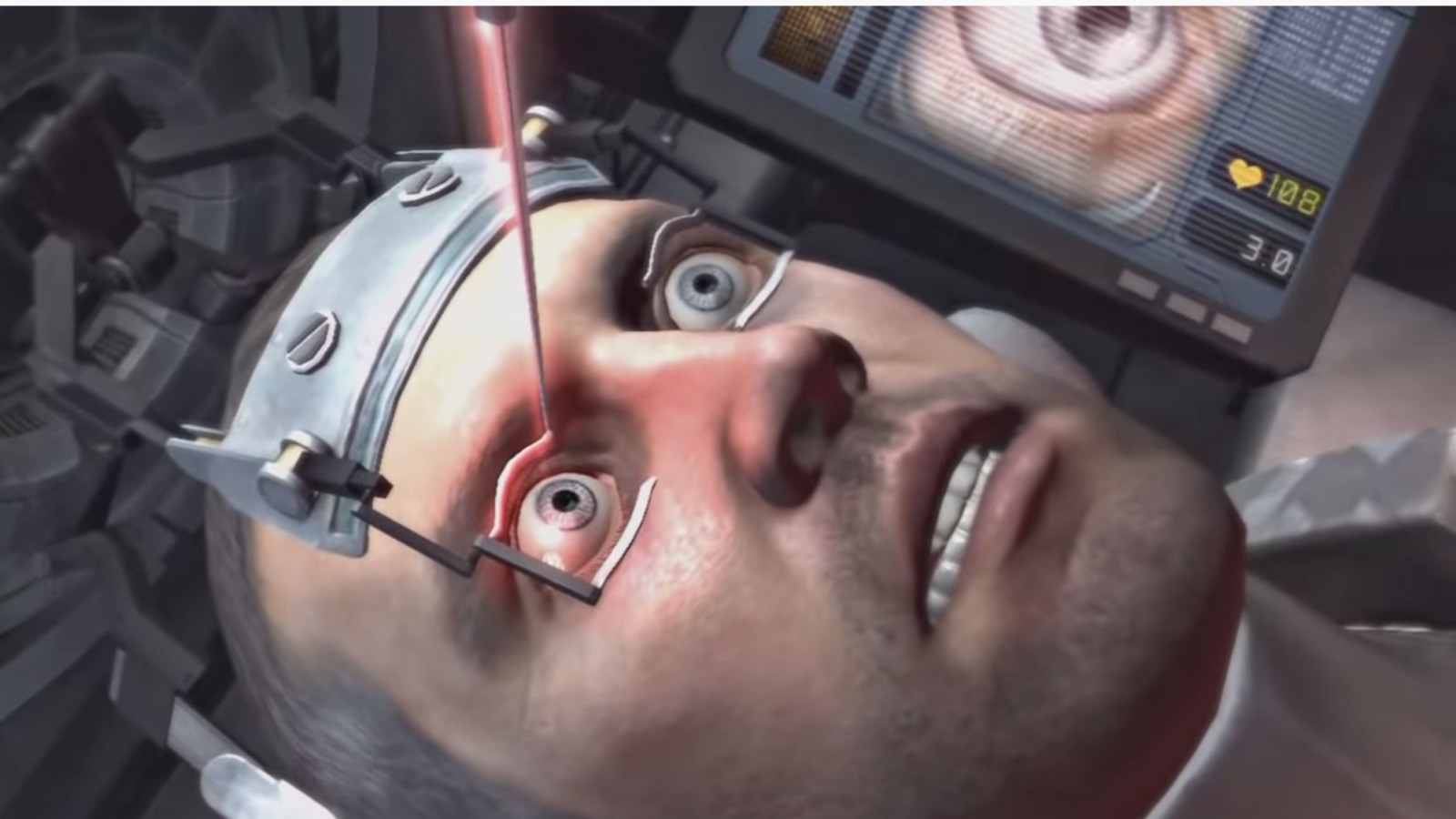
Brain and spine injections feel like they can go far. A lot of delivery methods are also related to where the destination needs to be. Potion of truesight delivered right into the eyeball? Or maybe give someone some MPTP, and watch them develop Parkinson's disease right before your very eyes.
Potential way to use this:
Drinking a health potion should give you a long riding, general improvement to healing. For one week, you recover from lethal damage twice as fast and add +4 to con rolls. Maybe even throw in something like "add +2 (or roll 1d4) as a bonus every time you recover HP"
Intravenous Injection of half a health potion lets you recover 2d6 HP or bypass a con save/roll. Only doable once per day before you roll % for liver toxicity or cancer development (-1 max HP every month until death for simplicity). Severed body parts can be mostly reattached within 24 hours if held in place. 1 HP regen every round?
Site specific injection might be more useful through a narrative lense, existing as a tool that isn't necessarily bound by strict rules. It might also work better for something that is not a health potion. For example, you have a potion that boosts the abilities of wizards. Chug it in combat for a quick and dirty buff, sure. OR, you could lay the wizard down on an operating table and inject the potion directly into a brain ventricle or his lumbar spine. After a week or so, the wizard gains a more minor but permanent buff.
The main takeaway is that potions or exogenous compounds shouldn't only have one method of use; HOW PCs make us of these tools can have differing effects. And, if you wanted to make healing harder but didn't want to remove health potions entirely, make them more "challenging" to use.
And you don't absolutely need fancy modern syringes either. The first "syringe" was made using a quill and an animal's bladder (no promises about quality though; 1% chance of infection when you inject if you want to be cruel, or have it be on an X in 20 chance if you don't take 10 minutes to clean the syringe beforehand).
Side effects is just shorthand for tradeoffs. The real gameable principle is that anytime your PCs may wish to use drugs for their benefit, they will have to weigh the side effects. Nausea for 1d6 rounds, falling asleep, unstoppable bleeding, momentary amnesia, dyskinesia, trouble sleeping, tremors, need to eat more, need to drink more water, blood clotting, etc... Many of these side effects can easily be repurposed into things that affect the game: resting ability, dex rolls, no memory can be interesting RP, blood loss, risk of heart attack.
Another avenue to consider is long term side effects. This may be difficult to actually model. While I am sure you could generate a system where every [length of time] you need to make a con roll that gets progressively harder with the amount of drug used, it is hard to say if your campaigns ever last that long in in game time for your characters to feel their nuts shrinking from taking too much exogenous testosterone.
A digression: any character good with pharmacology for buffs and healing will also probably be quite good at killing and poisons.
All poisons are just drugs that are dosed to kill. I am sure you can figure out how rampant cell division and growth in a "health potion" might be used to kill someone. For that matter, you might also realize that a drug that provides growth might also be useful as a PED. (IRL, many tumors in men respond strongly to testosterone, due to its effects on growth; how much does your fighter want that +1 strength?).
A drug or plant that decreases water retention might not be all that useful if none of your PCs have a disease that requires a diuretic, but give enough of it to a scumbag enemy and they may just pee themselves into dehydration and death.
Or I guess you could just get the duke's daughter addicted to opiates or something to destabilize the war effort. Really, the sky's the limit here.
As it turns out, the most useful thing about pharmacology might not healing others or your PCs, but killing all of the PC's enemies.
PEDs and "steroid" type drugs may be interesting, but might only be worth thinking about if you can keep them short term. Combat drugs with downsides is easy. Long term use of steroids in a fighter looks like... I have no clue! Trenbolone is a very funny androgen; IRL it can be used to gain quite a lot of muscle while losing fat and being in ridiculously low body fat %. Apparently it also makes you ridiculously horny, paranoid, and a mess to be around. I feel like this can be used, but HOW?
Wizard nootropics is also an interesting topic; take this pill to ramp up your magic dice or spell slots, when you come down you have a risk of getting schizophrenia or spell psychosis.
An older idea I once had: Wizards learn too many spells and begin to slide into spell psychosis. Some of these wizards take a drug/herb/thing that prevents their spell psychosis. BUT, it also limits their ability to cast spells in general and comes with a number of basically int decreasing effects. If you can't really access a big part of your brain, you might get brain fog. Right before battle (or anything that involves a lot of spells), they wean themselves off the drug and hope that they're not so crazy by the end of all this that they fuck off and forget to take their meds.
I suppose you could create an entire pharmacology "class" or profession out of this. There is so much potential information in here that you could really go hard. Healer classes where you cast a handful of protection spells are boring. But a bootleg fantasy medic might be neat. If you have a gritty setting with low access to magic, someone who knows how to administer stem cell injections, dose drug effects, do basic surgeries, and make poisons becomes extremely valuable (and I think versatile).
But personally I think things like this should be accessible to all players. How it manifests needs some work.
A very important concept in pharmacology is Mechanism of Action (MoA). The precise mechanism of how a drug works can open up different ways for you to use them.
A real life example: blood pressure medication. Some are ACE inhibitors, which prevent the creation of angiotensin, the molecule that signals for vasoconstriction. Sildenafil (viagra) inhibits PDE5 which increases cGMP, which promotes vasodilation. Nitroglycerin (a nitrate) also increases cGMP through a different mechanism.
They both can have similar effects, but the exact symptoms and side effects can be different. Furthermore, they can compound on each other; if someone is having chest pain and high blood pressure during an EMT call, one of the treatment options is the patient's nitroglycerin. BUT, you ALWAYS have to ask if the patient has taken any sexual enhancement drugs, because the combination will vasodilate the patient too much and KILL THEM.
If you want to, you can also design fun drug combination effects. The main point of using MoA is that you may be able to create a "health potion" in at least a handful of different ways.
Does the potion only accelerate natural healing and body functions? Effects: Cancer/"curse"/degenerative disease acceleration, rapid aging.
Does the potion use stem cells to generate and populate the wound with new cells? Effects: developing cancer risk, may only work for some injuries and not others (for example, new neurons in the brain does not necessarily do anything without the same connections). Or maybe they do and you give your spellcaster a big fat brain, maybe you can use it to slowly regrow a limb!
Does the potion actually just encourage the release of body growth factors? Maybe you can use it as a "steroid" for your fighter.
Is the potion actually just a blended troll? Better be careful not to infect yourself with micro trolls.
Or maybe the potion is time fluid secreted by gigantic fate weaver spiders. Drink too much and you might accidentally reverse your memory and your body.
As you can see, MoA can integrate fantasy fairly well. These lines of thought can be really interesting for thinking about biomancy.
Drugs do not come from all the same places either. Some can be created in a lab with basic materials, others can be synthesized from plants, and others can be harvested from complex organisms.
It is possible to integrate alchemical potions and drugs. You might fit it into a class or just have it as something PCs can do if they find an alchemist's notebook and get the right materials. But the more interesting option might be how you use gathering of biologically sourced compounds, specifically from monsters and other creatures.
The king has a quest for you: bring him the fresh penis bone of a Great Red Drake to be boiled into a fertility bone broth. As thanks, he will let you take some with you so that you too may enjoy a prodigious sexual enhancement stew, aphrodisiac, and fertility therapy.
There's room to fit in some pseudoscience/folk medicine/homeopathy stuff in here as well. What is dragon adrenochrome like? Maybe eating the heart of great beast actually does make you stronger. Or at least, it increases your charisma by 1, making you just a bit more "real" in the world.
Another example I need to get out of my head: there is a hormone known as HCG that is created by pregnant women involved in cell growth. This chemical has also been used in real life as an anabolic steroid adjunct. Here's the thing: before people learned how to harvest the hormone itself, the only way to really get HCG is in the urine of pregnant women.
How do we use this information? I'm not sure encouraging PCs to drink pregnant monster piss for stat bonuses is something you would necessarily want in your game, and harvesting the trophoblast cells around the early embryo has some "off putting" implications. But the actual implementation of these things, if you wanted to use them, doesn't seem too hard.
One last one, I promise. If you like putting a dash of sci fi into your setting, you may enjoy investigating beyond traditional ideas of drugs.
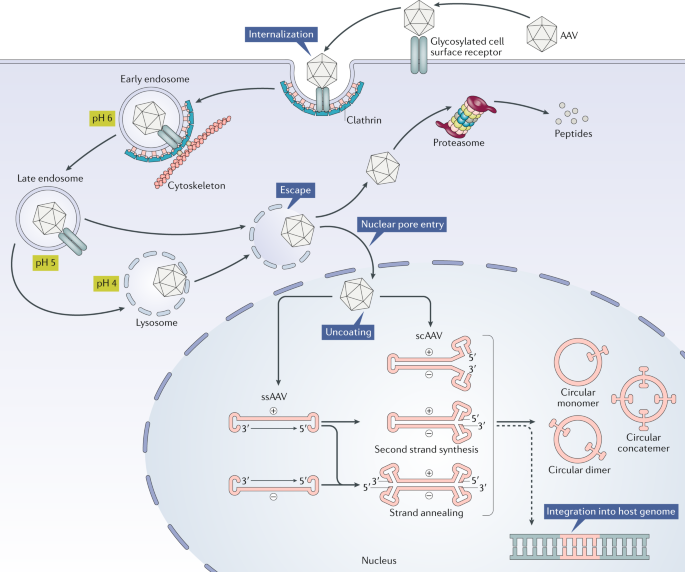
The most notorious of the up and coming potentials is gene therapy. Specifically, gene therapy using viral vectors to deliver the cargo into the cells you attempt to treat. Current methods of injection make delivery one of the core limitations. If you wanted to target the brain, there is really no other option than to directly inject into a ventricle, the spinal cord, or directly into brain matter.
But for D&D we do not need to be held back by such things. That thing about injecting a wizard for a permanent buff? Gene therapy. Your family curse? Gene "therapy". Elixir of youth? Gene therapy.
Beyond the merely biological you can get some neat ideas out of concept of "integrated biology": a rampant DNA code that tries to mimic whatever it eats, or maybe whatever it touches. Liches that control all their bodily functions, and use this to slowly turn themselves into things that are unrecognizable from their humanity.
The "dude" virus: A man feels feverish one day, goes about his business, collapses over, and dies. Over the next day or so his body breaks down into viral sludge and attempts to infect as many people as possible. The infected are slowly turned into clones of the first man who died, perhaps with memories limited to the day of infection. After maybe a week of assimilation the infected dies and sludgifies again.
After a few cycles, you get mutations in the viral strains. The "dude" changes a bit over time. Or, you have someone who acts as a carrier. Either as a "dude" who never reaches the sludge phase, or as a normal person who turns everyone else into "dudes" upon contact.
Some of these viruses are designed to be "cre dependent", which basically means that they have specific effects when a particular compound is ingested and then "activates" the programmed gene sequence. Practically speaking this just adds trigger conditions.
None of these ideas actually need to integrate any of the concepts I mentioned. It's entirely possible to have each thing as a standalone phenomena in your setting and having it completely untouched by these shitpost frameworks; the hope is that by introducing some of these framework concepts, it might help to jog a different perspective for creative juices.


.jpg/1200px-Peter_Paul_Rubens_-_Cain_slaying_Abel_(Courtauld_Institute).jpg)